


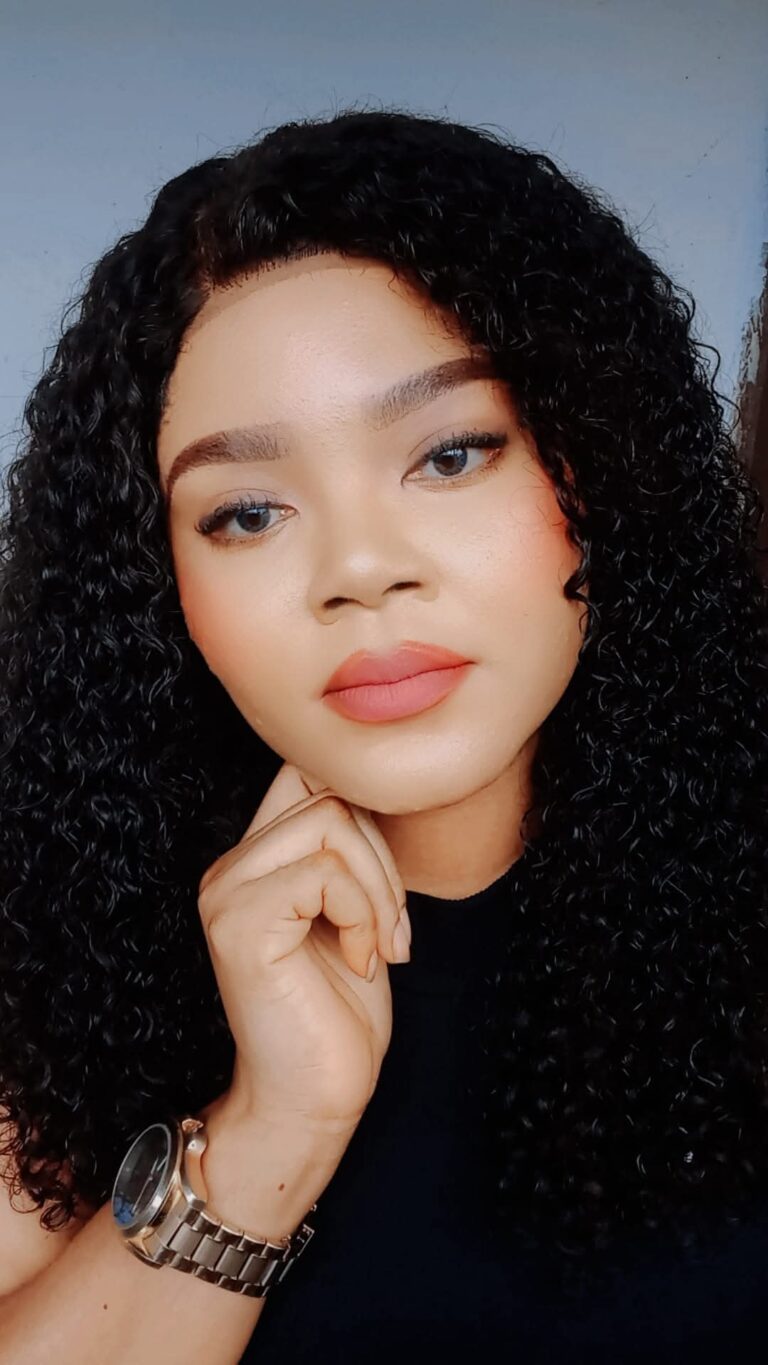
By Oreva Godwin
I will be very blunt and real about this topic. But before I go deeper, let me introduce myself fully to those who might be new readers. I’m Orevaoghene, a very proud Isoko woman. A full blood from Aviara in Isoko South LGA with both parents from the same community. And today I write not as a novice, but as one who knows the subject at hand very well.
As a woman born and raised in Calabar, I laugh when Isoko men compare us to Calabar or Akwa Ibom women, wishing we were more like them. And I must say, it is very laughable.
Why do I laugh? Because our men fail to understand their women, their culture, and their upbringing.
Let’s be clear: a typical Calabar or Akwa Ibom woman is groomed to please a man. From her mother she learns that the way to a man’s heart is through his stomach and his bed. Many women from different tribes fear losing their husbands to Calabar and Akwa-Ibom women, not because these women were naturally better, but because they were raised to be men-pleasers.
They watched their mothers worship their fathers, call them sweet names, cook and tolerate endlessly just to keep the man. They were taught that life is incomplete without a man; no matter how badly he treats you,
make sure you keep your man.
Now, let’s come to the Isoko woman. Our orientation is completely different. We are not raised to keep a man; we are raised to keep a home. Our mothers would ask us, “Na like this you go won take start family?” We are practically trained to be mothers, not wives.
It is no secret that Isoko women are hardworking, often more than the men. When it comes to business and entrepreneurship in Nigeria, leave it for the Isoko woman. A typical Isoko daughter grows up watching her mother hustle to the farm, the market, or the shop, then get home to cook and pick the family’s bills. House rent, school fees, toiletries, utilities. Many times, our mothers bore so much burden in silence.
This is the reality of most Isoko homes. Many of us watched our mothers drown themselves in work while enduring their husbands’ promiscuity and irresponsibility. From that experience, we learn how to be independent early. We’ve learned never to rely on a man for money. We became hard. We learnt the power of marriage is to bear children on time and train them.
And this is why we are seen as not being romantic. Our love language is different, we show care by supporting, giving, building. While we may worship a man, tolerate his disrespect, we don’t depend on him financially. A real Isoko woman will never depend on a man for her daily bread.
Yet, the same Isoko men who complain that we are “not romantic” are the ones who chase Calabar women for fun but marry us for stability. You can’t have it both ways. Only an Isoko woman will understand your culture, your pride, and your flaws, but you want her to be soft, submissive, industrious, and financially supportive all at once? That is not realistic.
Here is the truth: the little softness left in us depends on the kind of man we marry. The Isoko women who are considered soft are the ones lucky to have men who bring out their femininity. The ones who watch their fathers pay practically all the bills and treat their mothers like queens.
When a man behaves like a leader, his woman remains a follower. But when the leader fails, his woman unconsciously rises to become his equal or sometimes overtake him.
So, Isoko men should stop comparing us with women from other places. Stop complaining. Instead, learn how to nurture the softness in your woman.
And to my fellow Isoko women: yes, we are hardworking and industrious, but let us also be intentional about being soft sometimes. Listen to your man, hype him, speak kindly. Cuddle him, massage his feet while you talk. Reduce the sharp tongue. Don’t let hustle and independence rob you of tenderness.
I know it’s hard, because many of us never saw our mothers as being soft. I didn’t. My mom raised us alone most of the time while my dad was away for work. Funny enough, it was my dad who was soft and romantic; not my mom.
My dad made me realise that a man can be soft and very romantic when you own his heart. I saw my dad massage my mom’s feet, dance for her and us. He played with us and unconsciously programmed my mind to believe that, “this is the husband I want for myself,” but I did not learn softness from my dad, because I unknowingly felt it’s for men. I was focused on my mom, because we spent more time with her. I inherited her strength and independence, but also her hardness.
It’s funny that for someone born and raised in Calabar, I do not think like them or have their orientation. You will practically pick me out of a gathering of Calabar ladies, because I don’t see life the way they do. This is not to say I am better than them. After all they are to their own thinking and way of life.
For a lady who was raised in such an environment, my mom made sure we stood out differently. She gave us the typical Isoko strong woman training and watched how overly industrious she was.
We were made to mingle less with outsiders. Your siblings are your best friends. We were constantly reminded that we were in a strange land, to be careful and to stay united. This made us different from others in the environment, because we did not mingle enough to buy into the orientation of our hosts.
It was when I got to the university that I knew I was different. I tried to mingle, I had friends from Calabar and Akwa-Ibom, and I was always amused by their orientation. I saw their patience and tolerance towards men. I saw how they fought over men. I saw friends become enemies because of a man. Many of them paused their lives just to make a man happy. It was truly strange.
I remember how I would get home and tell my family about my friends, and my mom would warn me to focus on my academics and strive to be great. That a woman is only valued by a man when she has her own money. It is weird that I can’t stress over a man or even go through his phone, all because my mom never cared to go through my dad’s phone. I learnt that from her. I learnt not to let a man stress me.
One day, while I was complaining about my lover, I told my mom outright: “I don’t have time to pet a man; we’re adults, we should know what we want.” She laughed and said, “Me I can’t pet a man oo, me weh dey look for who go pet me?” And immediately I replied, “Me too!”
But later, I realized, I am my mother’s daughter, shaped by what I saw. And I told myself: this must change. I have to be romantic and soft. I can’t stop being hard, but I can reduce it. I can bring out my hardness when it’s needed.
Isoko women are not unromantic. We are simply women who learned survival before seduction, responsibility before romance, and strength before softness.
Romance did not die in us; it was postponed. Waiting for safety. Waiting for partnership. Waiting for a man who does not fear a woman who can stand on her own, but knows how to make her rest.
So, to my beautiful Isoko women, let’s break the cycle. Let’s not just be known for our strength, our hustle, and our independence. Let’s also be known for romance and softness. Let’s give our daughters both: strength and softness.
Because yes, we are the backbone of our homes. But we are also women, and there is nothing weak about being tender.
Strength builds our homes, but softness will heal our hearts.















Leave a Reply