


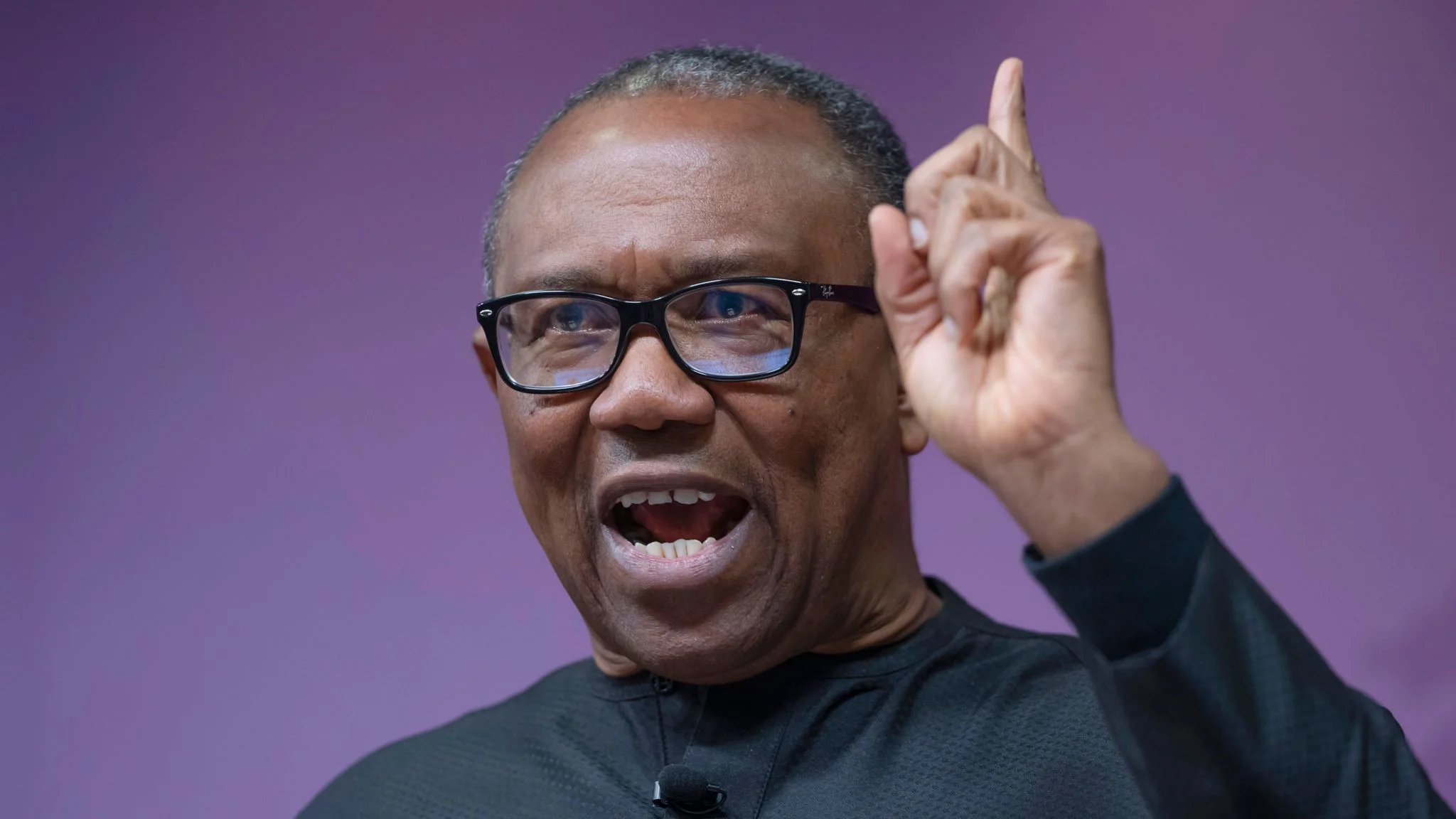
The 2023 Labour Party presidential candidate, Mr. Peter Obi, has cautioned the Federal Government against what he described as an approach to taxation that deepens poverty rather than promotes prosperity, insisting that sustainable development cannot be achieved by overburdening already struggling citizens.
In a statement on Friday, Obi argued that genuine economic and social transformation is rooted in national consensus, transparent governance, and honest leadership. Drawing from his interactions with leaders across the world, he said nations that have successfully transformed their economies did so by building trust with their citizens and uniting them around a shared vision of progress.
According to him, honesty remains the defining quality of transformative leadership, noting that governments owe citizens clarity, transparency, and sincerity in policy formulation and implementation. He stressed that leaders who exploit the people to enrich themselves and a few cronies ultimately undermine national unity and sustainable development.
Obi said Nigeria’s current taxation approach must be assessed against these principles, warning that taxation can only function as a legitimate social contract when it is fair, transparent, and demonstrably concerned with the welfare of the people. He maintained that tax policies should be clearly explained to citizens, including their impact on incomes and their expected contribution to national development.
“Without transparency, taxation becomes a tool of confusion and burden rather than a mechanism for growth,” he said, adding that Nigerians are increasingly being asked to pay taxes without clarity, justification, or visible public benefit.
Obi also called for a fundamental rethink of Nigeria’s fiscal strategy, emphasizing that the goal of taxation should not merely be to raise government revenue but to make citizens wealthier so that the nation itself grows stronger. He argued that a productive economy naturally expands the tax base, whereas excessive taxation in a weak economy only compounds hardship.
Obi identified the empowerment of small and medium-sized enterprises (SMEs) as the starting point for sustainable growth, noting that thriving small businesses create jobs, raise incomes, and broaden the tax base organically. “You cannot tax your way out of poverty; you must produce your way out of it,” he said.
He also expressed concern over what he described as an ongoing tax fraud controversy, alleging that, for the first time in Nigeria’s history, a tax law had been forged. Obi claimed that the National Assembly had admitted that the version of the tax law gazetted was not the same as what lawmakers passed, yet citizens were being compelled to pay higher taxes under what he called a manipulated framework.
Describing the situation as alarming, Obi said it was wrong to celebrate rising government revenue while the living conditions of citizens continued to deteriorate. He warned that any tax system that makes people poorer violates the core principles of good governance and sound fiscal management.
He concluded by calling for a fair, lawful, and people-centred tax system that supports production, rewards enterprise, protects the vulnerable, and restores trust between the government and the people, stressing that only such an approach can make taxation a true instrument for unity, growth, and shared prosperity.






Leave a Reply