


By Joke Kujenya
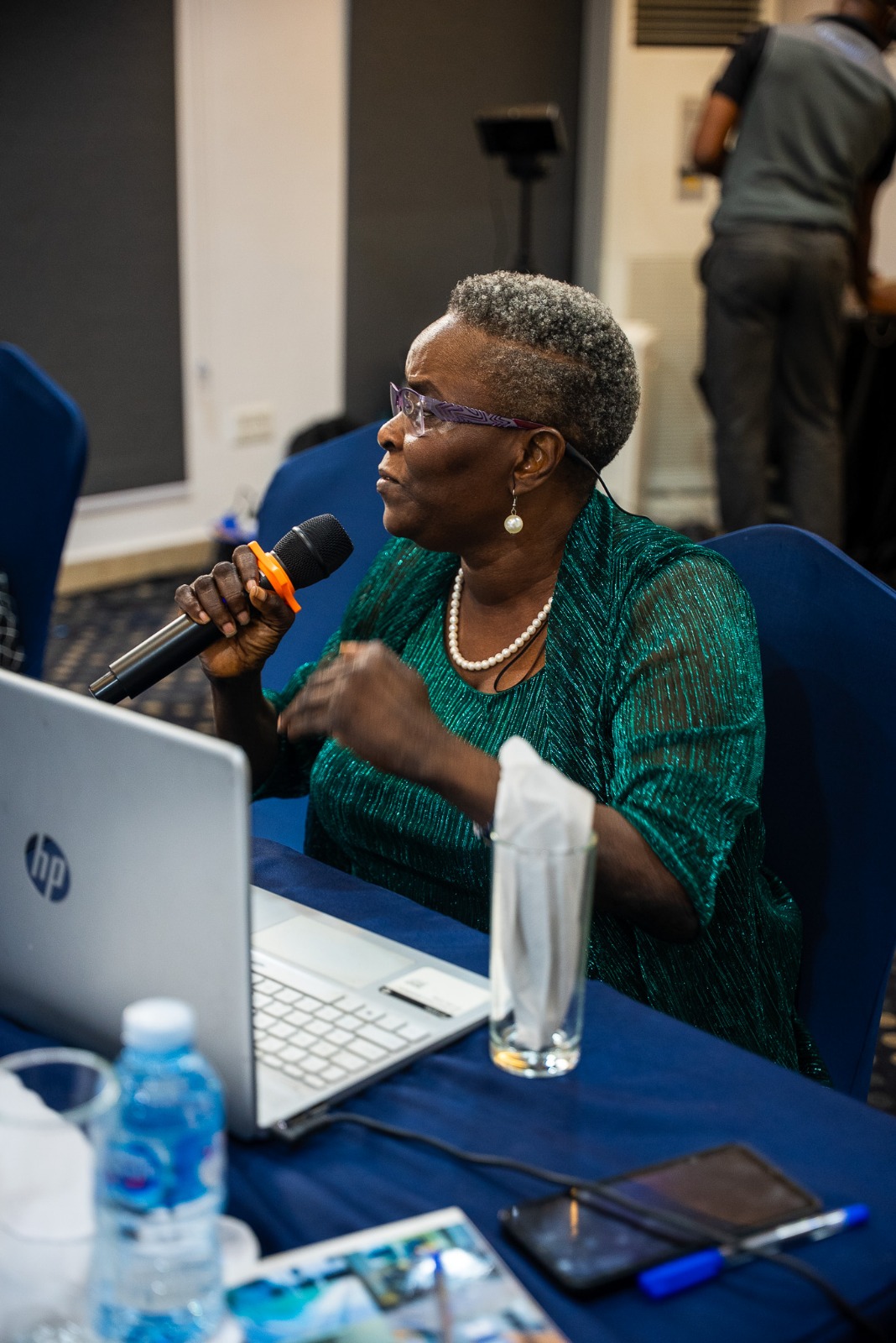
STRUCTURAL BARIERS limiting women’s advancement in the legal profession prompted a high-level roundtable dialogue in Lagos convened by East Africa Media Group (EAMG) in partnership with The Voice and Verdict Fellowship #Difference She Makes.
JKNewsMedia.com reports that the event, titled “Unlocking Women’s Leadership in Law: From Visibility to Power, Rethinking Leadership Pathways in the Legal Profession,” held on Tuesday, February 17, 2026, at Isglo Hotels in Ikoyi, Lagos State.
The cozy-closed-door dialogue brought together selected legal practitioners and top media executives to examine persistent leadership disparities despite increasing female visibility within the legal sector.
Hosted by the EAMG, the organisers stated that the forum was designed as a trust-based engagement space rather than a conventional public panel, allowing participants to critically assess institutional cultures, informal power dynamics, and media narratives shaping leadership opportunities for women in law.
Expatiating on the initiative, Founder and Chief Executive Officer of EAMG, Eugene Anangwe, said it seeks to shift the discourse from celebrating individual achievements to interrogating systemic obstacles that hinder sustainable progress for women professionals.
Discussions focused on identifying narrative gaps in media representation, institutional reforms needed to support women’s career progression, and strategic leverage points for strengthening female leadership pipelines within the legal profession.
Participating executives highlighted that women lawyers face disadvantages largely driven by societal beliefs and cultural expectations.
They identified patriarchy, stereotypes, and early social conditioning of the girl-child as factors hindering the progress of female lawyers.
Strongly expressing her views, Mrs. Chinyere Okororcha of Founder, Heels & Ladder, argued that, to some extent, the advancement of female lawyers is not solely a gender issue, but one that should be addressed by the Nigerian Bar Association (NBA).
She identified issues such as sexual harassment and a few unpleasant others, frequently experienced by female lawyers in workplaces, as major concerns.
Presenting what he had observed in a lighter mood, Barrister Agbada S. Agbada recounted the experience of a female colleague who left legal practice entirely due to sexual harassment.
He also mentioned other challenges which included but not limited to the psychological impact of disrespectful treatment by some judges and male colleagues who assume intellectual superiority over female lawyers.
Participating professionals at the roundtable included Mrs Chinyere Okorocha, Partner at Jackson, Etti and Edu; Barrister Stephen Azubuike; Uchenna Akingbade; and Agbada S. Agbada and Barrister (Mrs) Winifred Kwentua Aboderin.
Others from the media are Ms. Kujenya S. Ajoke, Editor-in-Chief and Publisher of JKNewsmedia.com; Mr Olumide Iyanda, Founder and Chief Executive Officer, Mighty Media Plus Network Limited, publishers of QEDNG; Mrs Yinka Shokunbi, Publisher and Managing Editor of Healthstyleplus Online; Mr Isioma Madike, Head of Investigations Desk at New Telegraph Newspaper.
Continuing, Agbada stressed that gender does not determine professional competence, noting that his wife, also a lawyer, is more experienced in litigation than he is.
He said he had observed that male lawyers often receive more opportunities for career advancement than their female counterparts, but he does not understand what factors could have informed such disparities.
As discussions delved deeper, the dialogue stressed the need for deliberate structures, systems, and policies to promote women into leadership positions.
One participant noted the absence of formal policies or legislation specifically supporting women, aside from the federal character principle in employment.
Okorocha said she recalled her organisation’s efforts to develop sexual harassment policies within law firms and expressed uncertainty about their implementation. Participants agreed that the media and judiciary need to collaborate to push female lawyers into leadership positions.
Anangwe responded that outcomes from the dialogue are expected to inform future advocacy, media framing, and institutional policy recommendations aimed at promoting equitable leadership structures within the legal and governance sectors.
Contributing from the media perspective, Ms. Joke Kujenya noted that some of the solutions to the issues in focus could stem from the ideas posited given that it can be duly considered.
She stated that as of 2024, the global population consists of approximately 4.09 billion men and 4.05 billion women, with men making up roughly 50.4% of the world’s population compared to 49.6% for women.
Highlighting deliberate invisibility, Kujenya said there is need for a combination of structural workplace reforms and proactive self-advocacy, adding that key strategies would focus on improving flexibility, providing targeted mentorship, ensuring pay equity.
She also adds that utilising returnships for those re-entering the workforce from antenatal care, redesigning promotion and compensation systems, adopting transparent data driven promotion criteria, and performing regular audits to ensure equal pay for equal work.
On the long run, she suggested that achieving an even 50-50 distribution of men and women across all levels of the legal profession could be possible but faces significant structural and cultural challenges that make it a long-term goal rather than a near future certainty.
She noted that while gender parity has been reached at the entry level with women often making up more than half of law school graduates, a leaky pipeline persists, resulting in severe underrepresentation of women in senior, equity partner, and leadership positions.
Kujenya told the gathering that from what she read on the situation globally, women hold only 30.6% of leadership positions with minimal growth since 2022, while in Nigeria women occupy 4.5% of seats in the National Assembly (NASS).
JKNewsMedia.com states that agreeing that there could be improvements, participating fellows collectively proposed solutions which included encouraging law firms to provide support systems that help female lawyers balance professional and domestic responsibilities.
Admitting that the discussion remains ongoing even beyond the physical roundtable, the team also emphasised the importance of training and mentorship programmes for women, as well as providing female lawyers with equal opportunities to appear in court rather than being confined to office roles.



















Leave a Reply